
NEWS
Walk through almost any new industrial park, logistics center, or commercial rooftop project today and one thing becomes obvious — solar systems are no longer designed the same way they were just a few years ago.
Project developers are asking different questions now.
Instead of simply looking at panel wattage, buyers are paying closer attention to:
- long-term energy yield,
- module efficiency,
- temperature stability,
- degradation rates,
- installation flexibility,
- and real operating performance.
That shift is exactly why high efficiency solar panels have moved from being a “premium option” to becoming the preferred solution for many modern photovoltaic projects.
For manufacturers, EPC contractors, and commercial energy investors, efficiency has become one of the biggest factors influencing overall system value.
And the technology behind it is evolving fast.
Table of Contents
Why High Efficiency Solar Panels Are Suddenly Everywhere
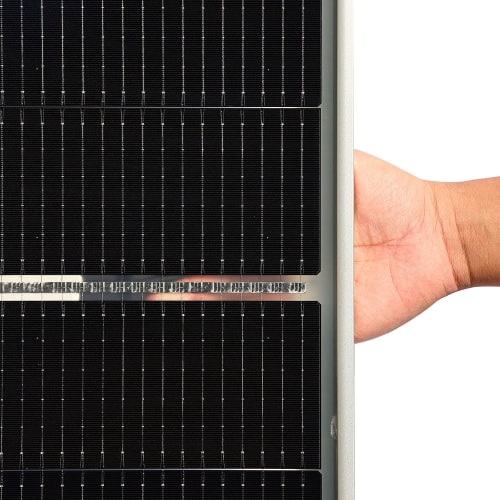
A lot has changed in the solar industry over the last few years.
Commercial rooftops are getting smaller relative to energy demand. Industrial electricity consumption keeps increasing. Land utilization standards for utility-scale solar farms are becoming stricter.
As a result, simply installing “more panels” is no longer the ideal solution.
The market is moving toward smarter photovoltaic systems capable of generating more electricity within limited installation space.
That is where high efficiency photovoltaic panels stand out.
Compared with conventional modules, high efficiency solar panels can deliver:
- higher energy density,
- stronger low-light performance,
- better temperature behavior,
- and more stable long-term output.
For factories, warehouses, agricultural facilities, and commercial buildings, that difference matters.
Especially in projects where roof space is limited.
The Real Reason Solar Panel Efficiency Matters
Many articles online focus only on laboratory efficiency percentages.
In reality, professional solar buyers rarely look at efficiency as a standalone number.
What they actually care about is this:
How much stable electricity can the system generate over time under real operating conditions?
That depends on much more than a datasheet.
Real-world solar panel performance is influenced by:
- climate,
- ventilation,
- installation angle,
- shading,
- operating temperature,
- cell structure,
- and module degradation.
Two photovoltaic modules may appear similar on paper but behave very differently after years of outdoor operation.
This is one reason why commercial solar projects are increasingly shifting toward advanced N-type solar technology.
Why N-Type Solar Panels Are Becoming the Industry Direction
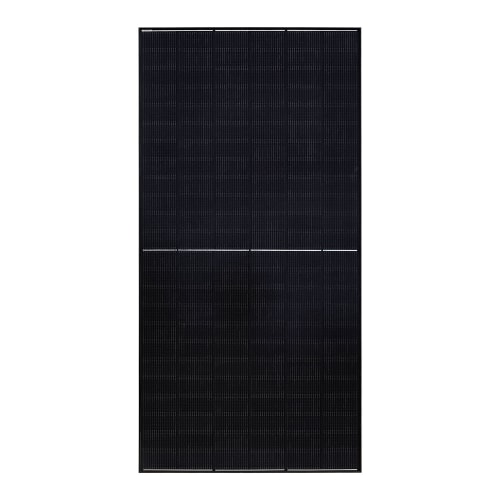
For years, traditional PERC solar panels dominated the photovoltaic market.
Now the industry is transitioning again.
Manufacturers are investing heavily in N-type solar cells because they offer several advantages that directly impact long-term system performance.
Lower Degradation
One of the biggest concerns in commercial photovoltaic projects is power loss over time.
N-type solar modules generally show lower degradation rates, helping maintain stronger energy generation throughout the system lifecycle.
Better Performance in High Temperatures
Heat has a major effect on photovoltaic efficiency.
In regions with strong sunlight and high temperatures, advanced N-type modules often maintain more stable performance compared with older technologies.
This is especially important for:
- industrial rooftops,
- desert solar farms,
- logistics parks,
- and large-scale commercial installations.
Improved Low-Light Response
Weather conditions are rarely perfect.
Morning light, cloudy environments, and seasonal changes all influence solar generation.
High efficiency solar panels using advanced cell structures typically perform better in lower irradiance conditions, which helps improve total annual energy yield.
TOPCon Solar Panels Are Reshaping the Market
Among all current photovoltaic technologies, TOPCon solar panels are gaining attention faster than almost any other module type.
The reason is simple.
TOPCon technology improves carrier transport efficiency while reducing energy loss inside the solar cell.
For project developers, that translates into:
- stronger module efficiency,
- better temperature stability,
- and improved long-term performance consistency.
But what is really driving adoption is practicality.
Commercial buyers are no longer only comparing peak output numbers.
They are looking at:
- operational reliability,
- energy retention,
- environmental adaptability,
- and long-term system efficiency.
That is exactly where TOPCon modules perform well.
High Efficiency Solar Panels Are Changing Commercial Rooftop Design
One trend many people overlook is how high efficiency photovoltaic modules are changing building design itself.
In the past, rooftop solar systems often had to compromise because of:
- HVAC equipment,
- structural limitations,
- shading obstacles,
- or limited installation space.
Now, with higher efficiency solar modules, commercial rooftops can generate more electricity using fewer panels.
That creates more flexibility for:
- logistics centers,
- manufacturing facilities,
- office buildings,
- agricultural structures,
- and distribution warehouses.
For industrial facilities with high daytime electricity consumption, this becomes particularly valuable.
Bifacial Solar Panels Are Expanding Beyond Utility Projects
Bifacial solar technology used to be associated mostly with large ground-mounted solar farms.
That is changing.
More commercial and industrial projects are now exploring bifacial photovoltaic panels because of their ability to generate electricity from both sides of the module.
Under suitable installation conditions, bifacial systems can improve overall energy yield without increasing rooftop footprint.
This is one reason why bifacial TOPCon solar panels are becoming increasingly common in:
- industrial parks,
- carport solar systems,
- agricultural photovoltaic projects,
- and utility-scale installations.
The combination of high efficiency cell architecture and bifacial energy gain is becoming one of the most important trends in modern solar engineering.
Choosing High Efficiency Solar Panels Is No Longer Just About Wattage
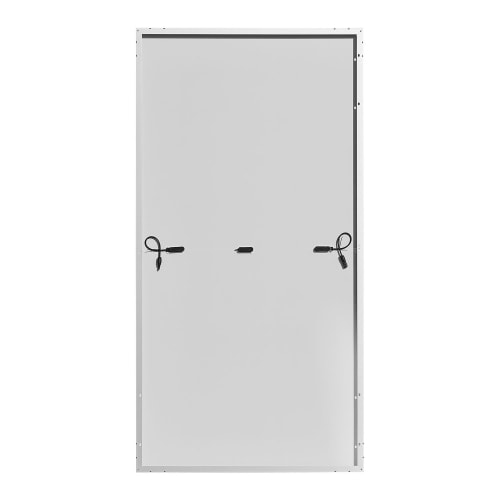
One mistake many buyers still make is assuming that higher wattage automatically means better performance.
Professional solar procurement is much more complex than that.
When evaluating high efficiency photovoltaic modules, experienced project developers usually consider several factors together.
Cell Technology
Different solar cell structures perform differently depending on climate and application conditions.
TOPCon, HJT, and bifacial technologies all have distinct operating characteristics.
Temperature Coefficient
Temperature directly affects energy generation.
Modules with better thermal performance can maintain more stable output during hot weather conditions.
Long-Term Reliability
Stable manufacturing quality matters.
Inconsistent materials or poor production control can affect system durability over time.
Application Environment
The ideal photovoltaic module for a factory rooftop may not be the best solution for an agricultural project or utility-scale solar farm.
Solar panel selection should always match the actual operating environment.
The Manufacturing Side of Solar Efficiency
One thing many blog articles fail to mention is that solar panel efficiency is not determined only by technology.
Manufacturing consistency plays a major role too.
Modern photovoltaic production involves:
- wafer processing,
- cell passivation,
- module encapsulation,
- glass selection,
- and precision quality control.
Even small variations in production standards can affect:
- power stability,
- durability,
- moisture resistance,
- and long-term module behavior.
That is why experienced solar panel manufacturers continue investing in:
- automated production lines,
- advanced inspection systems,
- and stricter quality management procedures.
As photovoltaic technology becomes more advanced, manufacturing precision becomes even more important.
Why Commercial Solar Buyers Are Focusing More on Long-Term Performance
The solar industry is gradually shifting away from short-term thinking.
Developers now pay closer attention to:
- lifecycle energy generation,
- degradation behavior,
- maintenance stability,
- and operational predictability.
For commercial projects expected to operate for decades, long-term consistency often matters more than peak laboratory efficiency.
This shift is influencing the entire photovoltaic supply chain.
Manufacturers are developing:
- more durable cell structures,
- better encapsulation materials,
- smarter energy management systems,
- and improved module reliability standards.
The goal is no longer simply producing solar panels.
The goal is producing photovoltaic systems capable of maintaining stable energy generation under real operating conditions for many years.
What the Future of High Efficiency Solar Panels Looks Like
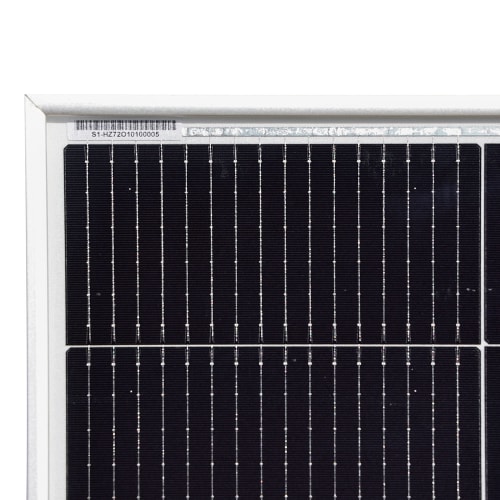
The next phase of photovoltaic development is already taking shape.
The industry is rapidly exploring:
- HJT solar technology,
- tandem solar cells,
- AI-assisted energy optimization,
- smart photovoltaic systems,
- and advanced bifacial architectures.
At the same time, sustainability is becoming part of the conversation.
Manufacturers are increasingly focusing on:
- lower carbon production,
- recyclable materials,
- cleaner manufacturing processes,
- and higher production efficiency.
In the coming years, solar panel efficiency will likely continue improving — but the bigger transformation may be how intelligently photovoltaic systems manage energy generation over time.
Final Thoughts
High efficiency solar panels are no longer a niche technology within the photovoltaic industry.
They are becoming the foundation of modern commercial and industrial solar projects.
As energy demand continues growing and installation conditions become more complex, buyers are placing greater importance on:
- long-term energy yield,
- stable performance,
- advanced cell technology,
- and manufacturing reliability.
Whether the project involves a factory rooftop, a logistics center, an agricultural installation, or a utility-scale solar farm, choosing the right high efficiency photovoltaic module now plays a major role in overall system success.
And as technologies like TOPCon, bifacial solar modules, and advanced N-type solar cells continue evolving, the gap between traditional solar systems and next-generation photovoltaic solutions will only become more significant.
FAQ
What are high efficiency solar panels?
High efficiency solar panels are photovoltaic modules designed to convert more sunlight into usable electricity, helping maximize energy output in limited installation space.
Why are TOPCon solar panels becoming popular?
TOPCon solar panels offer improved conversion efficiency, lower degradation, and better temperature performance compared with many traditional photovoltaic technologies.
Are high efficiency solar panels suitable for commercial projects?
Yes. High efficiency photovoltaic panels are widely used in factories, warehouses, office buildings, and utility-scale solar farms because they can generate more electricity with fewer modules.
What factors affect solar panel efficiency?
Solar panel efficiency can be influenced by cell technology, temperature, shading, installation angle, ventilation, and long-term module degradation.
How do I choose the right high efficiency solar panels?
When selecting high efficiency solar panels, it is important to evaluate cell technology, manufacturing quality, temperature coefficient, warranty support, and the specific application environment.
