
NEWS
Welcome to My Blog!
Before we dive into the content, if you’re interested in our products or have any questions, please feel free to visit our Contact Us page on the website. Our team is ready to assist you with inquiries, orders, or any support you may need.
Now, let’s get started on our journey together. I hope you find the content here insightful, engaging, and valuable.
Table of Contents
Understanding Solar Panel Sizes
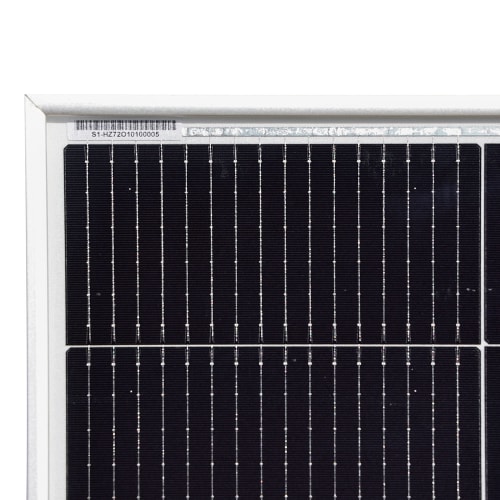
When it comes to installing solar panels, size matters—especially if your roof space is limited. Solar panels come in various dimensions and configurations, with the most common residential panels being 60-cell and 72-cell panels. A 60-cell panel typically measures around 39 inches by 65 inches, while a 72-cell panel is larger, often around 39 inches by 78 inches.
The size of the panel directly affects its power output and efficiency. Larger panels generally produce more electricity, but they require more roof space. Understanding these differences is essential to choosing the right panel for your specific roof constraints.
As a manufacturer, we offer panels in multiple sizes and wattages, ensuring that even homeowners or businesses with limited roof space can get maximum energy production.
Why Roof Space Matters for Solar Panel Installation
Before purchasing solar panels, it’s critical to measure your roof accurately. Not all roofs are the same, and limited space can present unique challenges. Factors such as roof shape, shading, and orientation can significantly impact how many panels you can install.
Common challenges with limited roof space include:
- Insufficient area for standard panels
- Reduced flexibility for panel orientation and tilt
- Potential shading issues from nearby structures
By carefully measuring and planning, you can maximize energy output even on a small roof. Our team provides guidance and customized recommendations to ensure you get the most efficient setup.
Choosing the Right Panel Type for Small Roofs
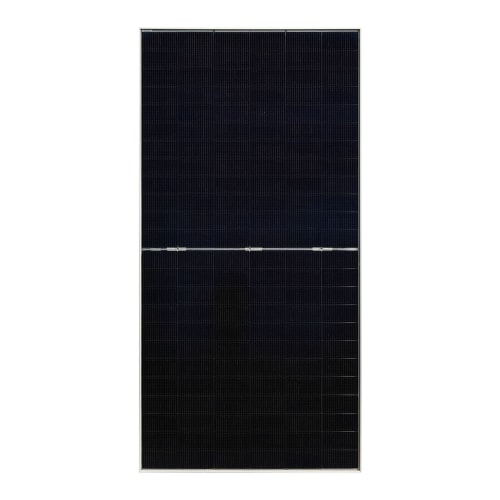
Not all solar panels are created equal. For small roofs, choosing the right panel type is crucial:
- Monocrystalline panels: Highly efficient and space-saving, ideal for rooftops with limited space.
- Polycrystalline panels: Slightly less efficient but often more affordable.
For limited roof space, we recommend high-wattage monocrystalline panels, which allow you to generate more electricity without increasing the footprint. Our manufacturing process ensures that these panels maintain top-tier efficiency while fitting compact roof areas.
Calculating the Number of Panels You Can Fit
Determining the number of panels your roof can accommodate is the next step. Start by measuring your roof’s usable area. Then, calculate how many panels can fit based on the panel dimensions.
For example, a roof measuring 20 feet by 30 feet can accommodate approximately 10–12 standard 60-cell panels, depending on spacing for tilt and maintenance.
We also offer a solar panel layout calculator on our website, helping customers quickly determine the ideal panel count and configuration for their roof space.
Optimizing Energy Output in Limited Space
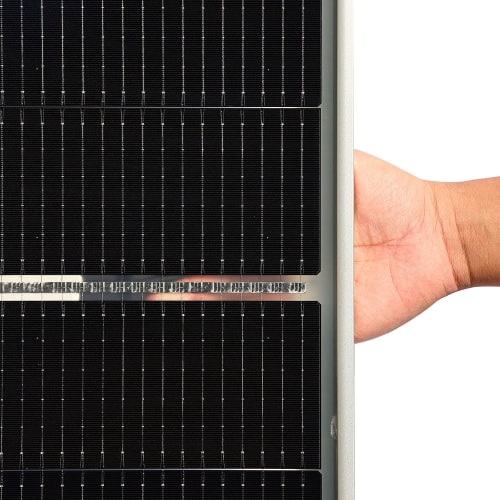
Even with limited space, you can maximize energy production through strategic panel placement:
- Tilt and orientation: Panels should face true south (in the northern hemisphere) and have an optimal tilt angle for your latitude.
- Spacing: Maintain adequate space between rows to avoid shading.
- Advanced technologies: Bifacial panels capture sunlight from both sides, increasing output without requiring additional roof area.
Our custom panels are designed with space efficiency in mind, ensuring that every inch of your roof contributes to energy generation.
Comparing Small vs Large Solar Panels for Limited Roofs
Deciding between small and large panels depends on your roof constraints and energy needs.
Small panels: Easier to fit in tight spaces and flexible for irregular roofs.
Large panels: Higher output per panel but may require more space.
As a manufacturer, we provide both compact and high-wattage panels, allowing customers to choose the best combination for their roof. Our expert team can advise on the ideal panel setup to maximize ROI.
Cost Considerations for Limited Roof Space Installations
Panel size also affects cost. Larger panels might reduce the number of units required, potentially lowering installation labor costs, while small, high-efficiency panels can maximize energy generation in tight spaces.
Investing in the right solar panel size ensures a better return on investment. Our panels are competitively priced, high-efficiency, and designed for durability, giving customers long-term savings on electricity bills.
Why Choose Hisem Solar Panels

As a manufacturer, we specialize in high-quality solar panels designed for limited roof spaces. Our offerings include:
- Custom panel sizes to perfectly fit your roof
- High-efficiency monocrystalline and bifacial panels
- Reliable warranties and top-tier product durability
By choosing our panels, customers benefit from tailored solutions that maximize energy output, reduce installation challenges, and provide a long-term energy investment.
FAQ
What is the standard solar panel size for residential roofs?
Most residential solar panels are 60-cell panels, measuring about 39 x 65 inches, while larger 72-cell panels are used for higher output or commercial applications.
How does solar panel size affect energy production?
Larger panels generally produce more electricity because they have more solar cells, but high-efficiency smaller panels can maximize energy output on limited roof space.
Can I install solar panels on a small or irregular roof?
Yes, by choosing compact, high-wattage panels or custom-sized panels, you can fit solar systems even on small or uniquely shaped roofs.
How do I determine how many solar panels will fit on my roof?
Measure your usable roof area, consider spacing for tilt and shading, and divide by the panel dimensions. Tools like a solar panel layout calculator make this process easier.
Are there space-saving solar panel technologies for limited roofs?
Yes, monocrystalline panels, high-wattage panels, and bifacial panels can increase energy output while using minimal roof space.
Need Help Choosing the Right Solar Panel Size?
If you’re unsure which solar panel size is best for your roof or energy needs, our experts are here to help. Contact us today for a personalized consultation, and ensure your solar system delivers maximum efficiency and savings. Don’t wait—get in touch now to start generating clean, reliable energy for your home or business!
