
NOUVELLES
Bienvenue sur mon blog !
Avant de plonger dans le contenu, si vous êtes intéressé par nos produits ou si vous avez des questions, n'hésitez pas à visiter notre Contactez-nous sur notre site web. Notre équipe est à votre disposition pour répondre à vos questions, passer vos commandes ou vous apporter toute l'assistance dont vous pourriez avoir besoin.
Commençons maintenant notre voyage ensemble. J'espère que vous trouverez ce contenu instructif, captivant et utile.
Table des matières
Residential solar panels continue to gain global momentum as homeowners seek energy independence, lower electricity bills, and sustainable living. This widespread adoption creates significant opportunities for installers, distributors, and EPC companies to expand their businesses with reliable and high-performance solar solutions. By working directly with a professional manufacturer, industry partners gain access to better quality, stronger technical support, and more competitive pricing—helping them stay ahead in an increasingly competitive market.
Overview of Residential Solar Panels and Current Market Demand
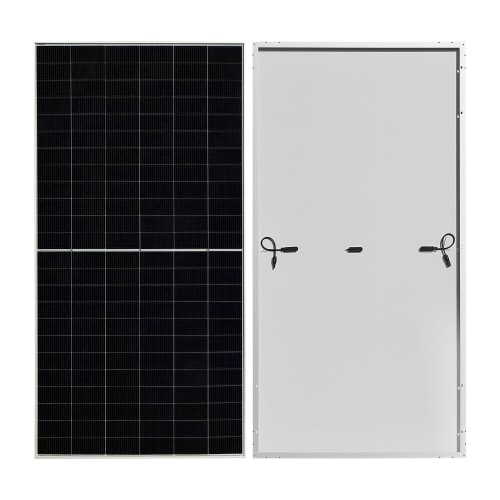
Residential solar panels are photovoltaic modules specifically engineered for rooftop installations on homes. They convert sunlight into usable electricity through silicon-based solar cells, allowing homeowners to reduce grid reliance and generate clean energy. As the technology continues to improve, residential solar systems have become more efficient, durable, and affordable, making them a preferred long-term investment for many households.
What Residential Solar Panels Are & How They Work
Residential solar panels contain multiple interconnected solar cells that capture sunlight and convert it into direct current (DC) electricity. This energy is then passed through an inverter to produce alternating current (AC), which powers home appliances. The performance of each panel depends on cell type, manufacturing quality, and environmental factors, meaning that high-quality production processes significantly boost real-world energy output.
Global Growth Trends in Residential Solar Adoption
Countries worldwide are witnessing rapid growth in residential solar installations, driven by government incentives, carbon reduction goals, and rising electricity prices. Homeowners increasingly view solar energy not just as a cost-saving measure but as a long-term investment that increases property value. This expanding market offers installers and distributors more opportunities to service diverse customer needs with high-performance solar solutions.
Why the Market Is Expanding for Installers & Solar Distributors
As interest in residential solar grows, customers demand panels that offer higher efficiency, better aesthetics, and longer lifespans. Installers and distributors who source directly from a reputable manufacturer can provide consistent quality and competitive pricing, strengthening their market reputation. This combination of customer demand and manufacturer support leads to greater profitability and steady business growth.
Why Work Directly with a Residential Solar Panel Manufacturer (Not a Retailer)
Working with a manufacturer offers strategic advantages that retailers and multi-tier distributors simply cannot provide. Manufacturers deliver better pricing, stronger technical reliability, and greater customization options. These benefits directly impact installation efficiency, long-term performance, and the overall value that B2B partners offer to their customers.
Lower Procurement Costs & Better Wholesale Pricing
By eliminating middleman markups, installers and distributors get factory-direct pricing that significantly boosts profit margins. This cost advantage enables partners to offer more competitive quotes in their local markets while maintaining healthy business profitability. For large-scale residential or community solar projects, these savings multiply substantially.
More Consistent Quality Control
Manufacturers enforce strict quality assurance protocols during every stage of production, ensuring that each panel meets reliable performance standards. Automated testing, material inspection, and precise assembly processes reduce the risk of defects and minimize after-sales issues. As a result, installers experience fewer callbacks and warranty claims, helping them maintain strong customer satisfaction.
OEM/ODM Customization Options
When working directly with a manufacturer, distributors can receive tailored solutions that meet their specific brand or project requirements. Options include custom labels, packaging, frame colors, power ratings, and full private-label branding. This flexibility allows distributors to differentiate themselves in competitive markets and strengthen their brand identity.
Stable Supply Chain & Bulk Order Support
Manufacturers maintain stable production capabilities, ensuring constant availability for large orders and recurring supply needs. This stability is crucial for installation companies and EPC contractors working on strict project timelines. With reliable supply and scalable output, partners can confidently expand their business without worrying about shortages or inconsistent stock.
Key Types of Residential Solar Panels We Manufacture
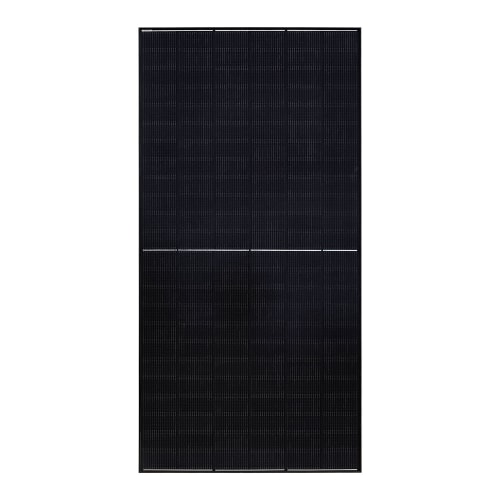
Different residential projects require solar panels with varying performance characteristics, and choosing the right type is essential to maximizing customer satisfaction. As a professional manufacturer, we produce a wide range of high-quality modules tailored to different needs and budget levels.
Monocrystalline Residential Solar Panels
Monocrystalline panels are the most popular choice for residential applications because of their high efficiency and sleek appearance. Their uniform black cells offer excellent aesthetics for rooftops while delivering strong output even in limited space. Their long lifespan and reliability make them a top-performing solution for most home installations.
Half-Cut High-Efficiency Residential Solar Panels
Half-cut cell modules are engineered to minimize resistive losses and maximize power generation. By cutting each cell in half, the panel operates more efficiently under shading or high-temperature conditions. This makes them ideal for rooftops with chimneys, trees, or other partial obstructions.
N-Type / TOPCon Residential Solar Panels
N-type TOPCon panels represent the latest advancement in solar technology, delivering higher efficiency and lower degradation rates compared to traditional PERC panels. Their excellent temperature tolerance and low-light performance ensure consistent energy output throughout the day. Homeowners seeking superior long-term ROI benefit greatly from this technology.
Best Use Cases for Each Panel Type
Each panel type suits different scenarios based on performance requirements and customer expectations. Standard monocrystalline panels work well for common residential rooftops with average sunlight. Half-cut modules perform best in partially shaded or hot climates. N-type TOPCon modules are recommended for premium installations where maximum efficiency and durability are top priorities.
Technical Specifications That Matter for B2B Buyers
For distributors, installers, and EPC firms, technical specifications must be evaluated carefully to ensure top-level performance and long-term reliability. Understanding these specifications helps partners choose the best panels for each project and optimize system design for customers.
Wattage Options
We offer residential modules across multiple wattage ranges, including 370W, 410W, 450W, and higher outputs depending on the format and cell type. Installers can choose models based on rooftop size, orientation, and customer energy needs. The availability of multiple wattage options ensures flexibility for diverse residential projects.
Efficiency Ratings and Real-World Output
Panel efficiency directly affects how much power can be produced within limited rooftop space. High-efficiency modules allow homeowners to generate more electricity from fewer panels, improving system aesthetics and performance. Real-world testing ensures that our modules deliver consistent energy output even under varied weather conditions.
Temperature Coefficient & Low-Light Performance
A lower temperature coefficient ensures panels maintain better performance during hot weather—a crucial factor for many regions. Enhanced low-light capabilities also allow panels to produce energy during mornings, evenings, and cloudy days. Together, these factors help maximize the total energy yield over the panel’s lifetime.
Durability, Certifications & Testing
All our panels undergo rigorous durability testing, including mechanical load, salt-mist, and ammonia resistance. International certifications such as IEC, UL, CE, and TÜV guarantee compliance with global safety and performance standards. Installers can confidently use our panels for both residential and small commercial projects.
Lifespan & Warranty
Our solar modules offer a long service life of 25–30 years, supported by industry-leading performance warranties. With lower degradation rates, homeowners receive more energy output over time, creating long-term value. This reliability strengthens the trust between installers and their customers.
Comparing Residential Solar Panels: Manufacturer’s Insights
Choosing the right panel involves comparing materials, technologies, and long-term performance characteristics. Manufacturers have unique insights into these differences because they oversee every step of production—from raw materials to final assembly.
Monocrystalline vs. Polycrystalline
Monocrystalline panels remain the best option for modern residential systems because they provide higher efficiency and a more uniform appearance. Polycrystalline panels are more affordable but offer lower efficiency, making them less suitable for homes with limited roof space. Most modern residential installations now prefer mono panels due to their performance and aesthetic advantages.
N-Type vs. PERC
N-type TOPCon panels outperform PERC panels in efficiency, degradation rate, and long-term reliability. Their advanced cell structure results in higher energy yields, especially in hot climates or low-light environments. For installers seeking high-performance solutions, N-type modules are becoming the go-to choice.
Glass–Glass vs. Glass–Backsheet Modules
Glass–glass modules provide enhanced durability and lower yearly degradation, making them a long-term premium solution. Glass–backsheet modules are lighter and generally more cost-effective, making them suitable for standard residential installations. Choosing the right structure depends on customer expectations and budget.
Cost-Performance Ratio
Balancing efficiency, durability, and cost is essential for maximizing value. High-performance modules deliver greater savings over time, while cost-effective models allow installers to offer more affordable system pricing. Manufacturers help optimize this balance by providing multiple product lines for different market needs.
How We Manufacture Residential Solar Panels: Inside the Production Process
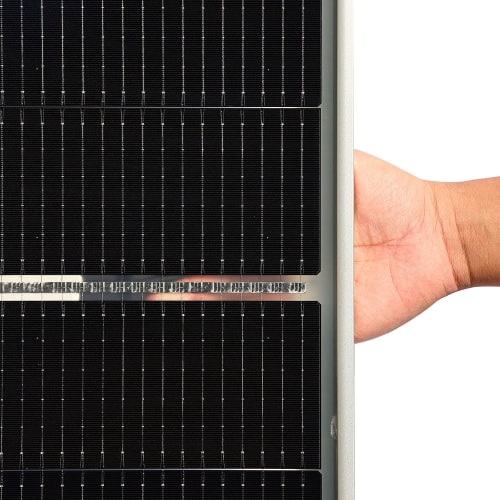
Manufacturing quality plays a critical role in the performance and durability of every solar panel. Our production process integrates advanced technology, strict testing, and premium materials to ensure each module meets high industry standards.
Automated Cell Soldering and Lamination
We use state-of-the-art automated equipment to ensure precise soldering and optimal cell alignment. Robots maintain consistent spacing and pressure, reducing defects such as micro-cracks. The lamination process further strengthens the module by protecting it against moisture, UV exposure, and mechanical stress.
Quality Inspection & Reliability Testing
Each panel undergoes electroluminescence (EL) testing to identify micro-cracks or cell inconsistencies before packaging. We also conduct thermal cycling, damp heat, mechanical load, and potential induced degradation (PID) tests. These quality checks ensure long-term performance in real-world environments.
Material Sourcing and Sustainability
We source high-quality silicon wafers, encapsulants, and backsheet materials from trusted global suppliers. Environmentally responsible manufacturing practices reduce waste and improve production sustainability. Using premium materials enhances both panel lifespan and long-term energy yield.
How Manufacturing Enhances Performance
A controlled and optimized production environment contributes to lower degradation rates, higher efficiency, and stronger durability. By focusing on quality from the first stage to final inspection, we create modules that deliver consistent performance over decades. This helps installers provide more reliable solutions to their customers.
Pricing and Procurement Options for B2B Buyers
Partnering with a manufacturer gives installers, distributors, and EPC companies access to efficient procurement options tailored to business needs. This includes flexible pricing, branding services, and logistical support.
Wholesale Pricing Structure
Factory-direct pricing ensures partners benefit from the lowest possible cost while still enjoying high product quality. This pricing advantage increases competitiveness in local markets and enhances profit margins. For partners handling large project volumes, the long-term financial benefits are significant.
OEM/ODM Branding Options
With OEM and ODM services, distributors can build a strong solar brand without needing their own production facilities. We offer customized labels, packaging, product designs, and marketing support. This enables partners to differentiate themselves and secure a unique position in their market.
Bulk Order Discounts & Partnership Models
Long-term partners receive preferential pricing, production priority, and contract-based discounts. These partnership models ensure that distributors can grow their business while maintaining stable supply. Installers working on multiple residential projects benefit from consistent stock availability.
Shipping, Logistics, and Global Delivery
We offer global delivery solutions with optimized packaging to ensure safe transportation. Our logistics team coordinates with freight partners to support smooth customs clearance and timely arrival. This streamlined process allows partners to focus on sales and installation rather than transportation challenges.
Installation Benefits for EPC Companies and Solar Installers
Panels designed with installers in mind help reduce labor time, minimize after-sales issues, and improve overall customer satisfaction. High-quality manufacturing ensures that installations are efficient and long-lasting.
Panels Designed for Easy Mounting
Our modules are engineered for compatibility with mainstream racking systems, making installation faster and more convenient. Lightweight frames and well-placed mounting holes further improve handling efficiency. These features help reduce labor hours and installation complexity.
Higher Energy Output = Better ROI for Your Clients
High-efficiency modules generate more power per square meter, offering homeowners better financial returns over time. This makes your installations more attractive and competitive in the market. When customers see real savings, they are more likely to recommend your services to others.
How Reliable Panels Reduce Customer Complaints
Consistent quality and durable construction significantly reduce technical issues after installation. This leads to fewer service calls and greater trust in both the installer and the panel brand. Reliable panels enable long-term customer satisfaction, improving your business reputation.
Case Studies from Successful Installers
Many of our partners report improved installation efficiency and reduced after-sales issues after switching to our modules. They also highlight positive customer feedback on energy output and panel appearance. These success stories demonstrate the value of choosing a dependable manufacturing partner.
Pourquoi nous choisir comme votre Residential Solar Panel Manufacturing Partner

Choosing the right manufacturing partner is essential for long-term success in the residential solar market. Our experience, quality standards, and support services make us a trusted choice for installers, distributors, and EPC companies worldwide.
Experience, Production Capacity, and Global Reach
With years of industry expertise, we have refined our manufacturing processes and quality control systems. Our production facilities have the capacity to meet large-scale and recurring orders. We ship to multiple global markets, supporting partners in diverse regions and climates.
Certifications & Compliance
Our panels are certified under major international standards, ensuring compliance with worldwide regulatory requirements. These certifications help streamline installation approval processes and boost customer confidence. The combination of strict testing and high standards ensures long-term reliability.
Turnkey Solutions for Solar Projects
In addition to panels, we offer technical guidance, system design recommendations, and after-sales support. These turnkey services help partners successfully complete residential or small commercial projects. By providing comprehensive support, we help you reduce project complexity and improve overall outcomes.
Dedicated Support for Installers, EPCs, and Distributors
Our sales and technical teams work closely with partners to offer fast solutions and expert advice. We provide product training, marketing materials, and long-term partnership support. This level of collaboration ensures that our partners always have the tools and knowledge they need to succeed.
Conclusion
Partnering directly with a professional residential panneau solaire manufacturer offers unmatched advantages in quality, pricing, customization, and supply chain stability. Our high-efficiency residential panels are engineered to deliver exceptional performance, making them a reliable choice for installers, distributors, and EPC contractors. By working with us, you gain a partner dedicated to helping your business grow in a rapidly expanding market.
FAQ
What is a residential solar panel?
A residential solar panel is a photovoltaic module designed to convert sunlight into electricity for home use. It is typically optimized for rooftop installations, offering high efficiency, long lifespan, and stable performance suitable for residential energy needs.
What is the best type of solar panel for residential applications?
Monocrystalline and N-Type TOPCon panels are generally considered the best for residential installations due to their high efficiency and strong low-light performance. They also provide better long-term reliability, which is essential for installers and EPC companies.
How long do residential panneaux solaires dernier?
Most high-quality residential solar panels last 25–30 years, with only gradual efficiency decline. Panels from professional manufacturers undergo strict durability tests to ensure long-term performance in various climates.
What certifications should residential solar panels have?
Residential solar panels should carry certifications such as IEC 61215, IEC 61730, UL 61730, or CE, depending on the region. These certifications ensure compliance with global safety, performance, and quality standards required by distributors and installers.
Do manufacturers offer OEM or custom branding for residential solar panels?
Yes, reputable manufacturers typically offer OEM/ODM services, allowing installers and distributors to customize branding, packaging, and specifications. This helps businesses strengthen their brand presence and provide tailored solar solutions to their customers.
Need Help Choosing the Right Residential Solar Panels?
If you’re unsure which residential solar panel is the best fit for your project, our manufacturing experts are ready to assist you. Contactez-nous today for a personalized consultation, wholesale pricing details, or OEM/ODM support tailored to your business needs. Don’t wait to enhance your product lineup—get in touch now and partner with a trusted solar panel manufacturer to power your growth!
