
NEWS
The solar industry has moved into a phase where supply chain decisions matter just as much as system design. In large-scale projects, the choice of Solar Panel Suppliers often determines whether a system performs consistently over decades or becomes a maintenance burden within a few years.
Instead of treating supplier selection as a simple sourcing task, experienced EPC contractors and project developers now evaluate suppliers as long-term technical partners. That shift is changing how procurement strategies are built across residential, commercial, and utility-scale solar deployments.
This article breaks down how professional buyers assess solar panel suppliers from a manufacturing perspective, focusing on practical decision-making factors that directly influence project success.
Table of Contents
Supply Chain Reality: What Solar Panel Suppliers Actually Control
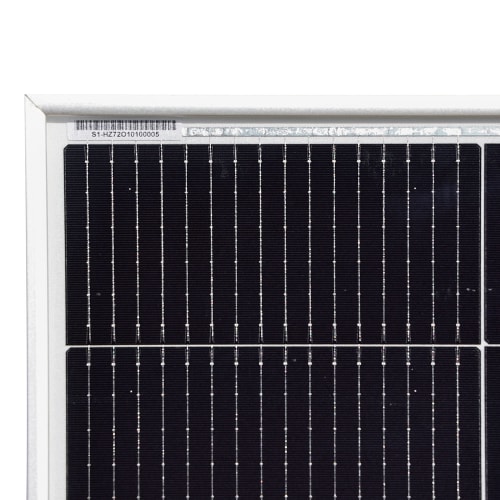
In most solar projects, the visible component is the module installed on rooftops or solar farms. What is less visible is the chain behind it—materials, engineering decisions, testing processes, and production discipline.
A capable solar panel supplier typically controls:
- Cell selection and grading consistency
- Lamination and module assembly quality
- Environmental durability testing
- Final performance validation before shipment
This is why two visually identical panels can behave differently in long-term operation. The supplier’s internal manufacturing system plays a larger role than most buyers initially assume.
Why Direct Manufacturing Sources Change Project Outcomes
A recurring pattern in global procurement is the difference between factory-based suppliers and intermediary trading channels.
Working directly with a manufacturing-driven supplier often results in:
- More consistent product specifications across batches
- Faster technical communication during project planning
- Better adaptation to engineering requirements
- Reduced risk of documentation or certification gaps
For EPC contractors managing multiple sites or phased installations, these factors are not minor—they directly influence scheduling stability and system reliability.
What Experienced Buyers Look at Before Shortlisting Suppliers
Professional procurement teams rarely rely on surface-level product descriptions. Instead, they evaluate a combination of operational and technical indicators.
Key evaluation points include:
- Stability of production output over time
- Depth of quality inspection procedures
- Consistency in module efficiency across batches
- Environmental performance under real-world conditions
- Export readiness and documentation completeness
A supplier that performs well across these areas is typically more suitable for long-term infrastructure projects than one offering isolated product advantages.
Inside Solar Panel Manufacturing: Where Quality Is Actually Defined
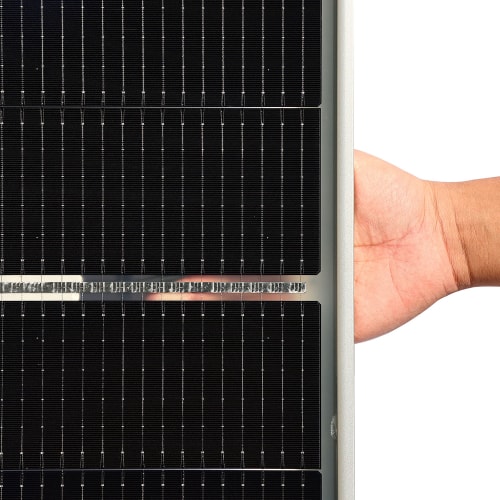
Quality in solar modules is not determined at the final inspection stage—it is built step by step during production.
Typical manufacturing control points include:
- Incoming raw material screening before production
- Cell classification based on electrical performance
- Lamination control to ensure structural integrity
- Thermal cycling and mechanical load testing
- Final output calibration under standardized conditions
Each stage reduces variability and ensures that modules perform consistently in different environments, from high-temperature regions to high-humidity coastal areas.
OEM and Custom Engineering: A Growing Requirement in Solar Procurement
As solar projects become more diverse, standard products are no longer sufficient for all applications. Many buyers now require customized solutions from their suppliers.
OEM-oriented solar panel suppliers typically support:
- Customized module specifications for project conditions
- Branding alignment for distributors and regional partners
- Engineering adjustments based on installation environments
- System compatibility optimization for EPC integration
This flexibility has become especially important in markets where energy infrastructure varies significantly across regions.
Wholesale Procurement: Why Planning Matters More Than Ordering
Large-scale solar deployment is rarely a single purchase event. It is usually a phased process tied to engineering schedules, approvals, and site readiness.
In this context, wholesale procurement decisions are less about unit sourcing and more about:
- Ensuring specification consistency across multiple batches
- Aligning supply timing with project milestones
- Maintaining documentation continuity
- Coordinating logistics for multi-site delivery
Suppliers that understand this structure tend to support smoother project execution and fewer operational interruptions.
Global Supply Chain Positioning and Manufacturing Clusters
Solar manufacturing has developed strong regional clusters, with highly integrated production ecosystems supporting global demand.
These clusters typically provide:
- Mature upstream and downstream supply networks
- Scalable production infrastructure
- Established export logistics routes
- Standardized engineering and testing systems
This structure allows solar panel suppliers in these regions to support both large utility projects and distributed energy installations efficiently.
Technology Progress That Is Reshaping Supplier Selection
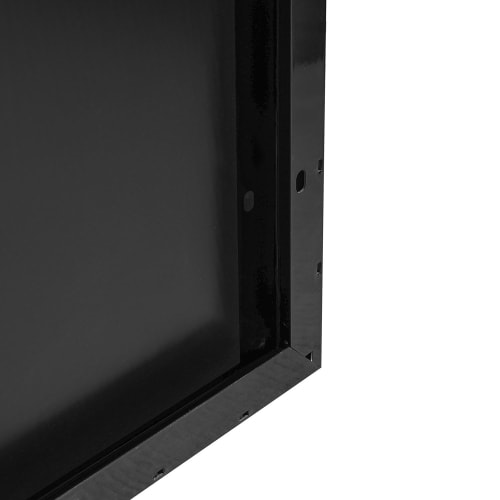
The solar industry is not static. Module design, efficiency levels, and material science continue to evolve.
Some of the most relevant developments include:
- Improved crystalline cell architecture for higher output stability
- Enhanced resistance to temperature fluctuations
- Reduced long-term degradation rates
- Better low-light performance in varied environments
These improvements are shifting procurement focus from short-term output metrics to long-term performance consistency.
How to Evaluate Supplier Reliability Without Relying on Marketing Claims
In practice, supplier credibility is best assessed through structured validation rather than promotional descriptions.
A practical evaluation approach includes:
- Reviewing production capability in relation to project scale
- Checking authenticity and scope of certifications
- Requesting sample testing under controlled conditions
- Verifying previous export and project experience
- Assessing technical communication during early discussions
This approach helps reduce uncertainty before committing to large-scale procurement decisions.
Common Procurement Errors That Affect Long-Term Project Stability
Many project issues are not caused by installation or design errors but by early-stage supplier selection decisions.
Frequent issues include:
- Choosing suppliers based only on surface-level specifications
- Overlooking manufacturing traceability
- Ignoring documentation quality and consistency
- Underestimating the importance of long-term technical support
- Working with non-integrated supply channels
Avoiding these mistakes significantly improves system stability over time.
Where Solar Panels Are Being Applied at Scale Today
Solar deployment is expanding across multiple sectors, each with different technical expectations:
- Distributed residential energy systems
- Commercial rooftop installations
- Industrial energy optimization projects
- Utility-scale solar generation plants
- Hybrid and off-grid infrastructure systems
Each application places different demands on suppliers in terms of engineering support and consistency.
Long-Term Supplier Partnerships and Why They Matter
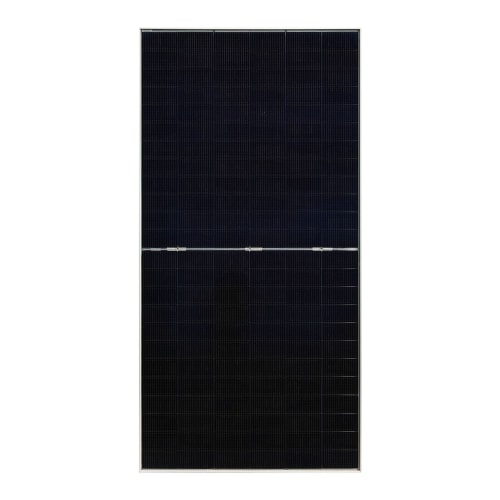
The solar industry is increasingly moving toward partnership-based procurement rather than one-off transactions.
Long-term cooperation with solar panel suppliers provides:
- More stable production planning for phased projects
- Better alignment with engineering requirements
- Faster resolution of technical adjustments
- Improved consistency across multi-year deployments
This model is becoming a standard approach in large infrastructure and energy transition projects.
Conclusion
Choosing the right Solar Panel Suppliers is no longer a simple sourcing decision. It is a strategic step that affects system performance, project continuity, and long-term energy output.
Manufacturing capability, quality control systems, OEM flexibility, and supply chain stability all play a role in determining whether a supplier can support real-world project demands. In large-scale solar development, the most reliable results come from suppliers that combine production strength with consistent engineering discipline and long-term support capability.
FAQ
What should I look for in reliable solar panel suppliers?
Reliable suppliers should have stable production capacity, verified certifications, strict quality control systems, and proven export experience. Manufacturing capability and consistent module performance are key indicators of long-term reliability.
What is the difference between solar panel manufacturers and suppliers?
Manufacturers produce solar panels directly in their factories, while suppliers may include manufacturers, distributors, or trading companies. Direct manufacturers usually offer better consistency, technical support, and production transparency.
Why is OEM service important when choosing solar panel suppliers?
OEM services allow customization of solar panels based on project requirements, including specifications, branding, and engineering adjustments. This is especially important for EPC contractors and long-term energy projects.
How do solar panel suppliers ensure product quality?
Quality is ensured through multi-stage processes such as raw material inspection, cell efficiency testing, lamination control, environmental simulation tests, and final performance verification before shipment.
Why are solar panel suppliers important for large-scale projects?
They ensure stable supply, consistent product quality, and technical support throughout project execution. Reliable suppliers help reduce operational risks and improve long-term system performance across large installations.
